Industrial heating fuel
Standard Pellet
- Calorific value
- ≈ 4,300 kcal/kg
- Moisture
- ≤ 12%
- Ash content
- ≤ 8%
- Application
- Boilers, kilns, district heating
Our offerings
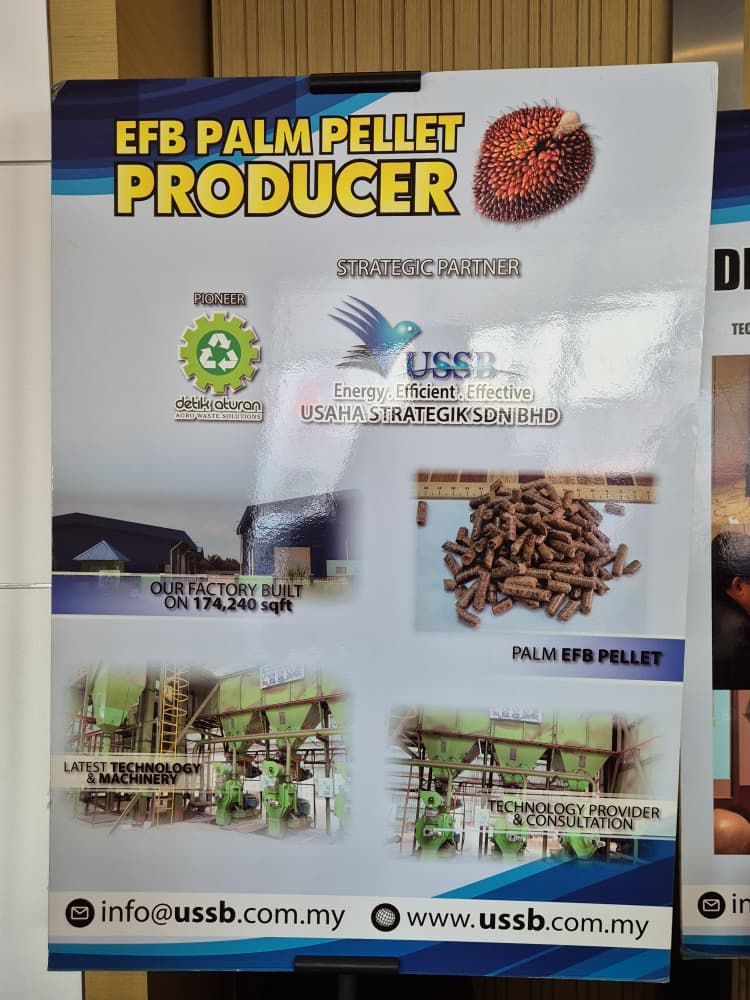
Three industrial-grade pellet types developed for specific energy applications. All grades certified by TNBR, SIRIM and SGS, and proven in utility tests with KEPCO, Stadtwerke Rosenheim and Energie AG.
Industrial heating fuel
Co-firing & utility grade
Direct coal replacement
Performance
Our biomass pellets deliver approximately 4,300 kcal/kg — within striking distance of coal's 4,800 kcal/kg — while costing roughly 40% less per equivalent unit of energy generated. Combined with their zero-carbon profile, they are the most economically rational decarbonisation lever available to thermal utilities today.
Detailed specifications
| Parameter | Specification | Test method |
|---|---|---|
| Diameter | 6 – 8 mm | ISO 17829 |
| Length | 10 – 40 mm | ISO 17829 |
| Bulk density | ≥ 650 kg/m³ | ISO 17828 |
| Mechanical durability | ≥ 97.5% | ISO 17831-1 |
| Moisture content | ≤ 10% | ISO 18134 |
| Ash content (washed) | ≤ 4% (dry basis) | ISO 18122 |
| Gross calorific value | ≥ 4,500 kcal/kg | ISO 18125 |
| Sulphur (S) | ≤ 0.05% | ISO 16994 |
| Chlorine (Cl) | ≤ 0.10% | ISO 16994 |
| Nitrogen (N) | ≤ 1.0% | ISO 16948 |
| Fines (< 3.15 mm) | ≤ 1% | ISO 18846 |
All grades independently tested by SIRIM, TNB Research and SGS. Specifications shown for Premium washed grade — Standard and Coal-Switch grades available on request.
Downloadable spec sheets
Download the latest spec sheet for each pellet grade. Need a parameter clarified or an updated lot certificate? Use the 'Request update' button — our technical team typically reverts within two business days.
Industrial heating fuel — ~4,300 kcal/kg, ≤ 8% ash.
Co-firing & utility grade — washed EFB, ≤ 4% ash, ≥ 4,500 kcal/kg.
Torrefied drop-in coal replacement — ≥ 4,800 kcal/kg, hydrophobic.
Beyond fuel
The primary use — replacing coal, gas and oil in industrial boilers, district heating networks and large biomass power stations across Asia and Europe.
The same nutrient-rich pellets can be used as livestock feed, supporting circular agriculture and food security in tandem with energy supply.